A deep dive into funnel-first scripting, motion psychology, and conversion optimization
Section
Most SaaS explainer videos fall into the same trap: they lead with features. Nudge AI needed something different. Instead of listing capabilities, we built a video that walks into a buyer's actual problem, solves it in motion, and closes on a single action—exactly where their conversion funnel needed it most.
Here's how we broke down the process, what worked, and why the approach moved the needle.

Opening frame establishes the pain point—not the product
The Brief: Convert Abstract Into Visible
Nudge AI is behavioral psychology software built for enterprise teams. It's invisible to the end user—it sits in the background, detecting friction points and nudging behavior change. The product itself can't be shown; it has to be felt through outcome.
Standard approach: "Here's our software, here's what it does." Our approach: "Here's the problem your team faces every day. Here's how it changes when you solve it."
Insight:When a product is abstract or invisible, lead with the job the buyer is already struggling to do—not the tool that fixes it. The tool comes in the middle as the obvious answer.
Motion graphics translate abstract psychology into visual narrative
The Script: Problem-First Structure
We built the script in three acts:
Act 1: The Friction (0–20 sec)
Open on the job Nudge solves—teams trying to drive behavior change but hitting adoption walls. We showed this through micro-moments: abandoned onboarding, users dropping off, dashboards going unused. No software yet. Just friction.
Act 2: The Solution in Motion (20–50 sec)
Nudge enters. We animated how it works at the system level: detecting drop-off points, calculating nudge timing, delivering contextual guidance. The animation doesn't explain features; it visualizes the cause-and-effect loop the buyer wants to create.
Act 3: The Outcome (50–90 sec)
We closed on the result: adoption curves rising, teams aligned, behavior change happening at scale. Single call-to-action: book a demo with the sales team.
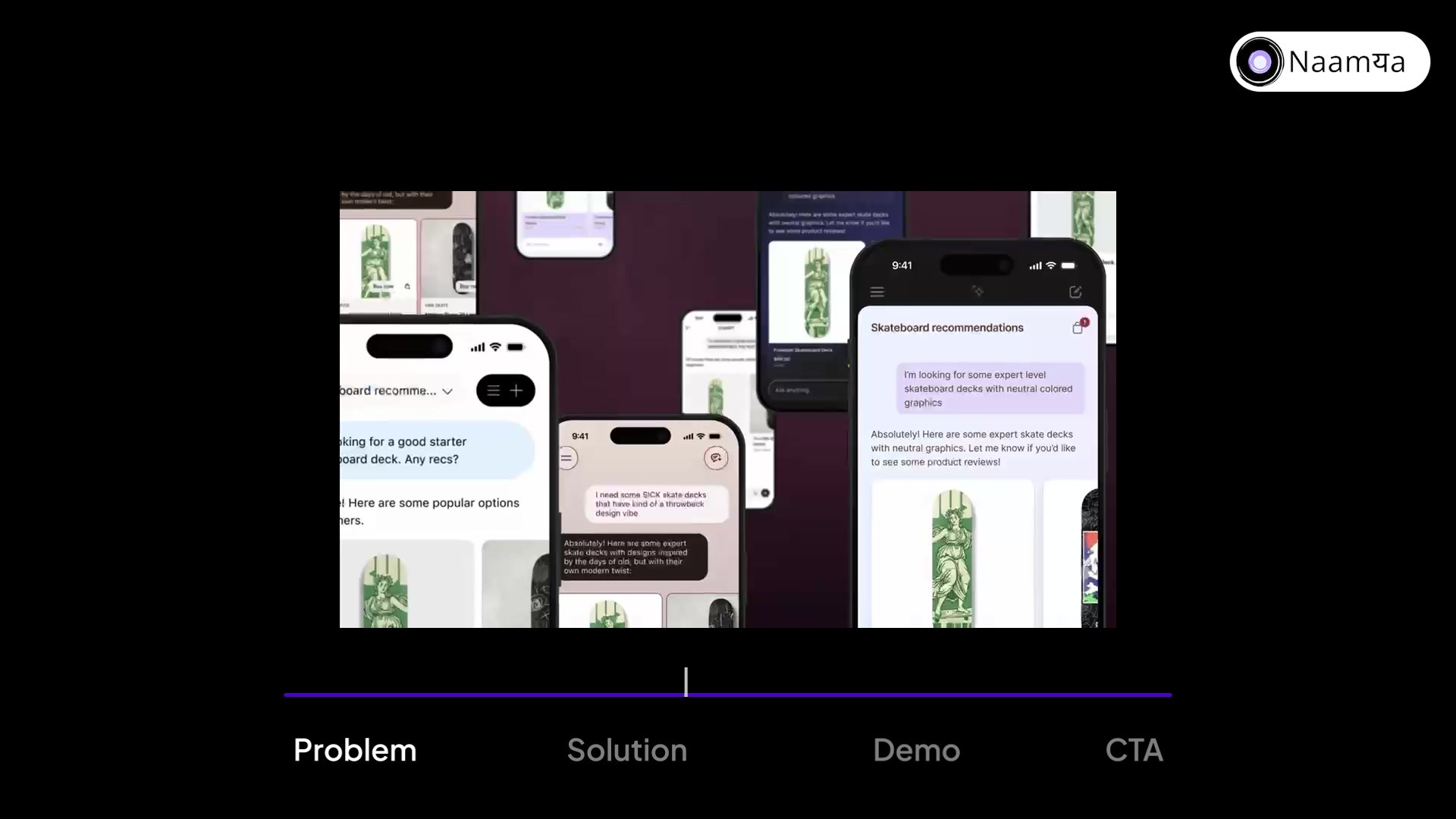
Mid-video: Showing the software solving the problem in real time
Why This Works:The script maps to your buyer's decision journey—not your feature list. Every scene answers the unstated question the buyer is asking at that stage of the funnel.
Design & Animation: Motion as a Metaphor
The animation style was deliberate. We used clean motion graphics—not to look polished, but to make abstract concepts concrete:
Color psychology: Red for friction points, green for resolved states. The buyer's brain processes this before conscious reading happens.
Pacing: Friction scenes move fast (chaotic, overwhelming). Solution scenes slow down (controlled, logical, clear).
Visual hierarchy: The user's journey is always the primary object; software layers in as the enabler, never the star.
The entire motion strategy serves one purpose: reduce cognitive load. The viewer's brain doesn't have to translate; the motion shows the transformation directly.

Final sequence: Outcome visualization built on motion metaphor
Placement & Distribution
A strong script means nothing if it runs in the wrong place. We delivered:
Homepage master (90 sec): Full narrative—establishes the problem and solution for first-time visitors
Vertical social cuts (15–30 sec): Friction + single outcome—built to stop thumb-scrolling, not for deep understanding
Ad variants (6 & 15 sec): Hook + call-to-action, tested separately for CTR and watch-through rate
Each cut serves a different funnel stage. Awareness gets the friction hook. Consideration gets the full story. Bottom-funnel gets the CTA-focused variant.
Results & Learnings
What Moved the Needle
Average watch-through rate:68% (industry standard: 45–55%)
Social clicks from 15-sec variant:+34% vs. feature-first control
Homepage visitors who trigger video:52% of traffic
Why Problem-First Wins
The viewer doesn't need to understand what Nudge AI is—they need to know you understand their problem. When the first 10 seconds answer "this person gets me," the next 30 seconds feel like a solution instead of a pitch.
The Bigger Picture
This video didn't exist in isolation. We mapped it into their sales funnel: homepage placement for awareness, email sequences for nurture, sales calls for objection handling. The video was the tool; the funnel was the strategy.
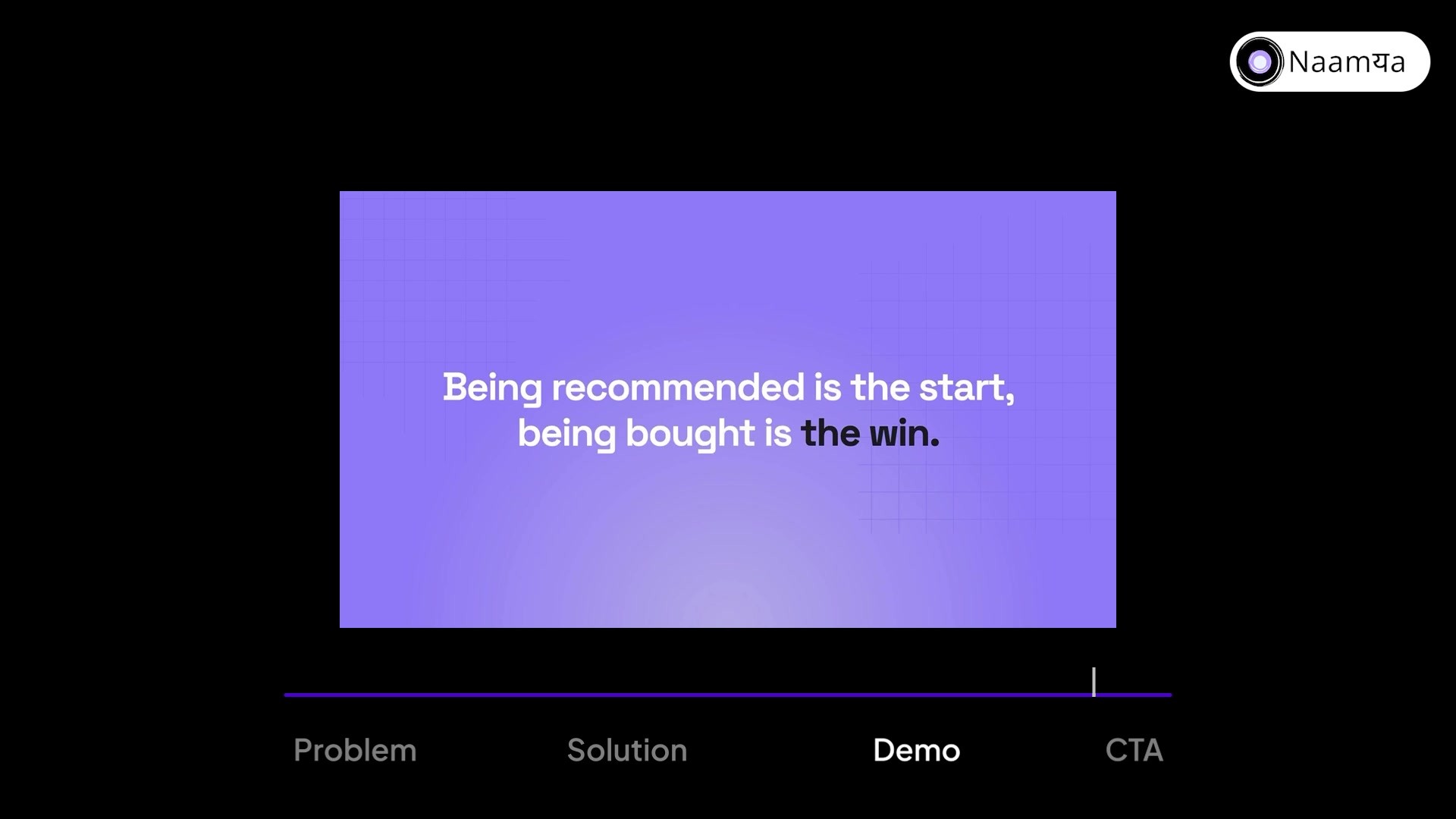
Closing frame: Single, clear next step—no menu of options
Key Takeaways for Your Next Explainer
Open on friction, not features. The first 10 seconds should make your buyer nod—not educate.
Script for psychology, not narrative. Every scene removes an objection or answers a question in your buyer's journey.
One outcome, one call-to-action. If your video ends with "here are three things you can do," the viewer does nothing.
Motion is the medium, not the message. Animation that dazzles without clarity is expensive decoration. Animation that clarifies is strategy.
Funnel placement matters more than production value. A perfectly scripted video in the wrong funnel stage will underperform. A good video in the right place will move pipeline.
Ready to Engineer Your Explainer?
The Nudge AI case study is one example of how funnel-first scripting, motion psychology, and strategy-driven placement can move the needle on conversion. If your SaaS product feels invisible or your homepage video isn't moving traffic into demos, the issue is often in the structure, not the animation.
We work with SaaS founders, product managers, and marketing leads who are past the DIY-screen-recording stage and need a video that actually converts.